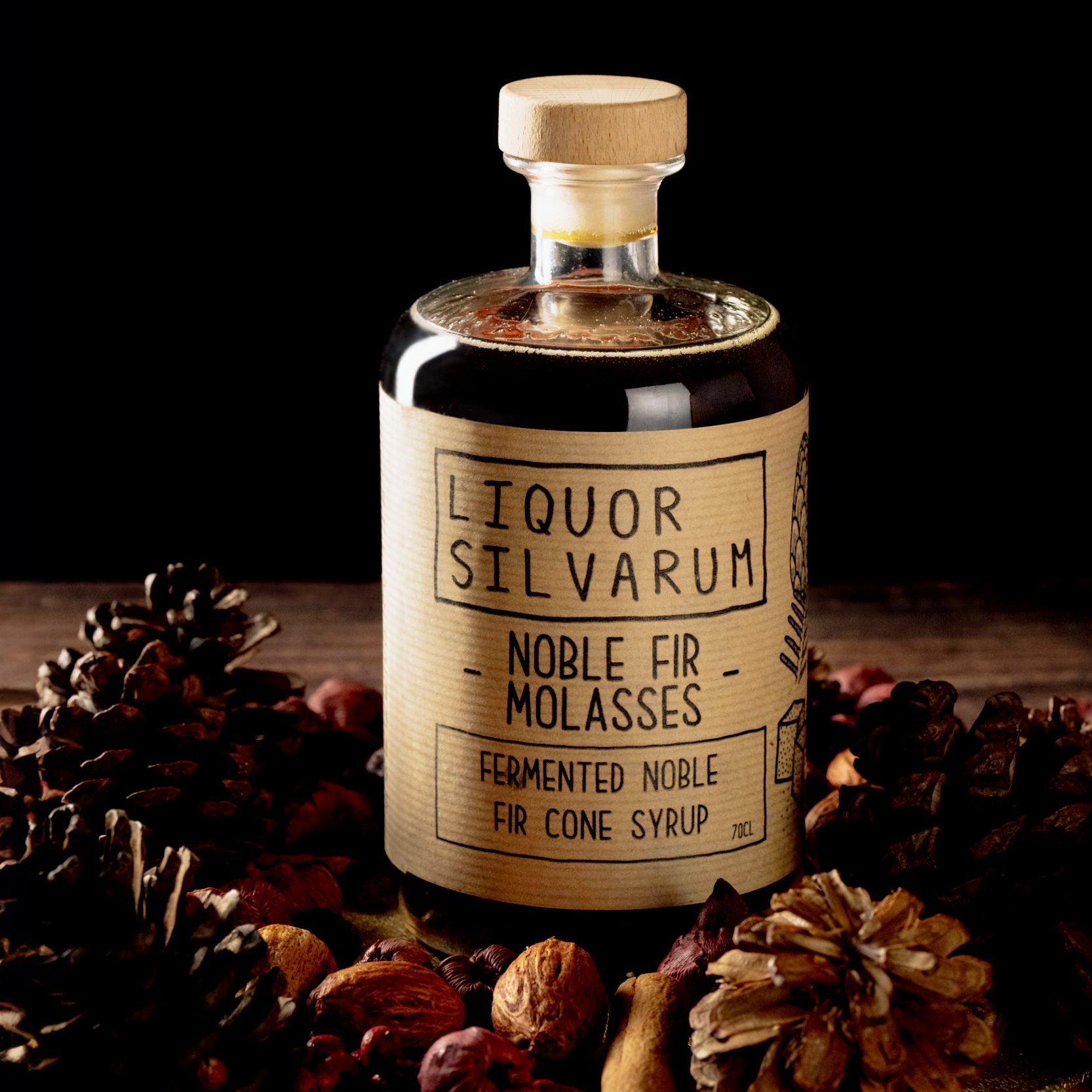

”After making pine, fir & spruce cone syrups for many years, I decided this season to create a blended ferment using multiple species collected from an arboretum. It’s a simple process: young cones are layered with sugar, slowly drawing out moisture and flavour through fermentation. I make these ferments most years using edible conifers, and this one will stay “live” as I continue adding spruce and fir cones as each species reaches the right stage for collecting.
One of the simplest and most beautiful wild ferments you can make.
GeorgeFlavour Fred
Most commonly made using young green pine cones packed in sugar slowly transform over weeks into a dark, resinous syrup rich with citrus, forest notes, spice and deep pine aroma. Many know fermented pine cone syrup as “Mugolio” — a traditional Italian throat-soothing syrup made from the Dwarf Mountain Pine (Pinus mugo). Similar methods also exist in Korean “Cheong”, where sugar and time are used to preserve fruits, roots and other ingredients. Variations of this process are also common across parts of Eastern Europe and the Caucasus, where these syrups have long been valued both as food and winter medicine.
As the sugar draws out moisture, fermentation begins, and the jar slowly changes into something tasting almost halfway between herbal honey, cola and spruce resin. Some years back I made this process using young Noble Fir cones. Recently I rediscovered a 4-year-old jar from that batch and the flavour is incredible — deep, rich and intensely aromatic. The key is using very young, soft cones. If you can easily cut through them with a knife, they’re usually at the right stage. Flavour depends heavily on species. Scots Pine often gives softer citrus notes, andi enjoy the zing of spruce tips and cones with depth from the Noble fir. Here comes a blend. Always identify conifers carefully. ALWAYS avoid Taxus species (where the poisonous yew sits), as well as most Cypress species, where consumption is generally not advised. As always: harvest lightly and respectfully. Trees are slow-growing ecosystems in themselves, supporting fungi, insects, birds and countless other species. I like using the syrup sparingly: — drizzled into sparkling water — in cocktails (especially an Old Fashioned with rye whisky) — over yoghurt or ice cream — mixed into marinades — or simply taken by the spoonful