
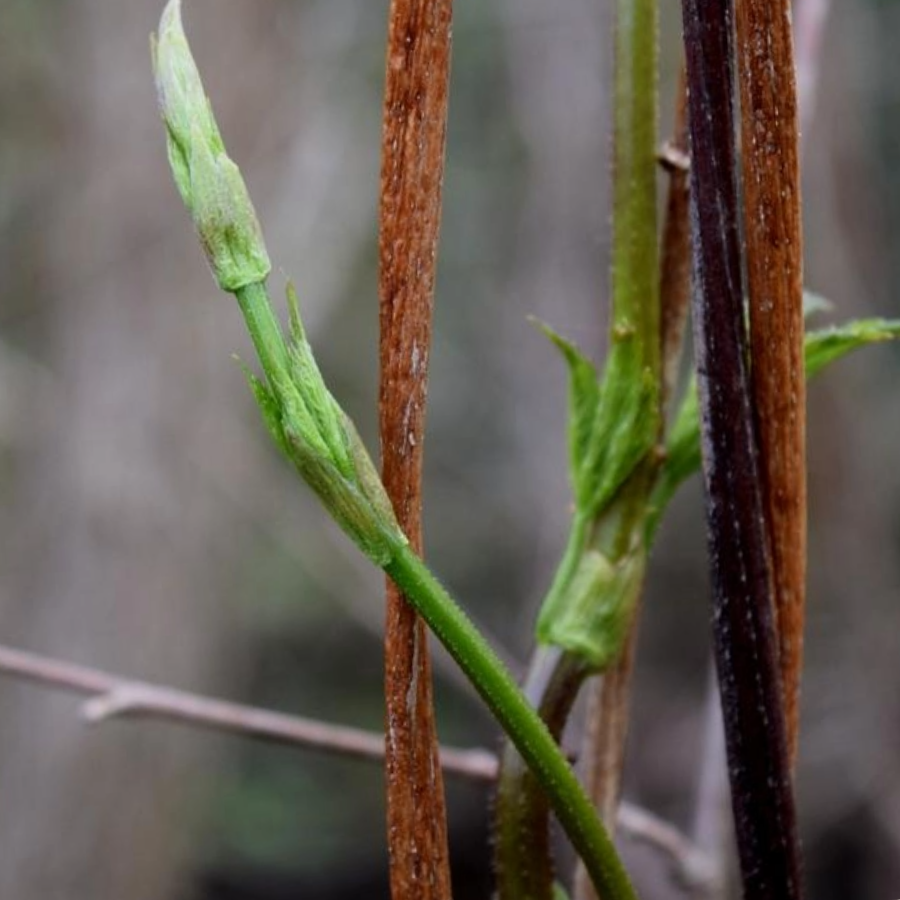

”Wild hops don’t climb with tendrils like ivy or clematis. Instead they’re a bine — wrapping themselves clockwise around hedgerows, elder, hazel and blackthorn using stiff hooked hairs along the stem. By late summer they can completely engulf sections of woodland edge in pale green curtains.
GeorgeFlavour Fred
Most people only know hops from beer. But historically they were much more than that. Young spring shoots were once foraged and eaten almost like wild asparagus. In parts of northern Italy they still are. Known regionally as bruscandoli or wild hop shoots, they’re collected from hedgerows and used in risottos, omelettes and pasta dishes. In some Italian regions the shoots are considered a seasonal delicacy and can fetch surprisingly high prices. Wild populations are especially common through northern Italy where Humulus lupulus naturally thrives along rivers, damp woodland margins and old agricultural boundaries.
Botanically, hops belong to the Cannabaceae family — making them a close relative of cannabis. Once you notice the leaf shape and resinous aroma, the relationship suddenly becomes obvious. The female flowers develop into the familiar papery cones covered in lupulin glands — tiny golden resin sacs packed with bitter acids, volatile oils and antimicrobial compounds. These evolved as plant defence chemicals long before humans decided they tasted good in ale. Wild British hops are usually far more variable than cultivated brewing varieties. Some produce intensely aromatic cones while others are almost scentless. Researchers studying Italian wild hop populations have found huge genetic and chemical diversity between local ecotypes, with some showing unusual aromatic profiles not seen in commercial strains. (mdpi.com) Traditionally hops were also used medicinally. Dried hop pillows were stuffed into bedding as a mild sedative, with the volatile oils believed to aid sleep and calm nervous tension.