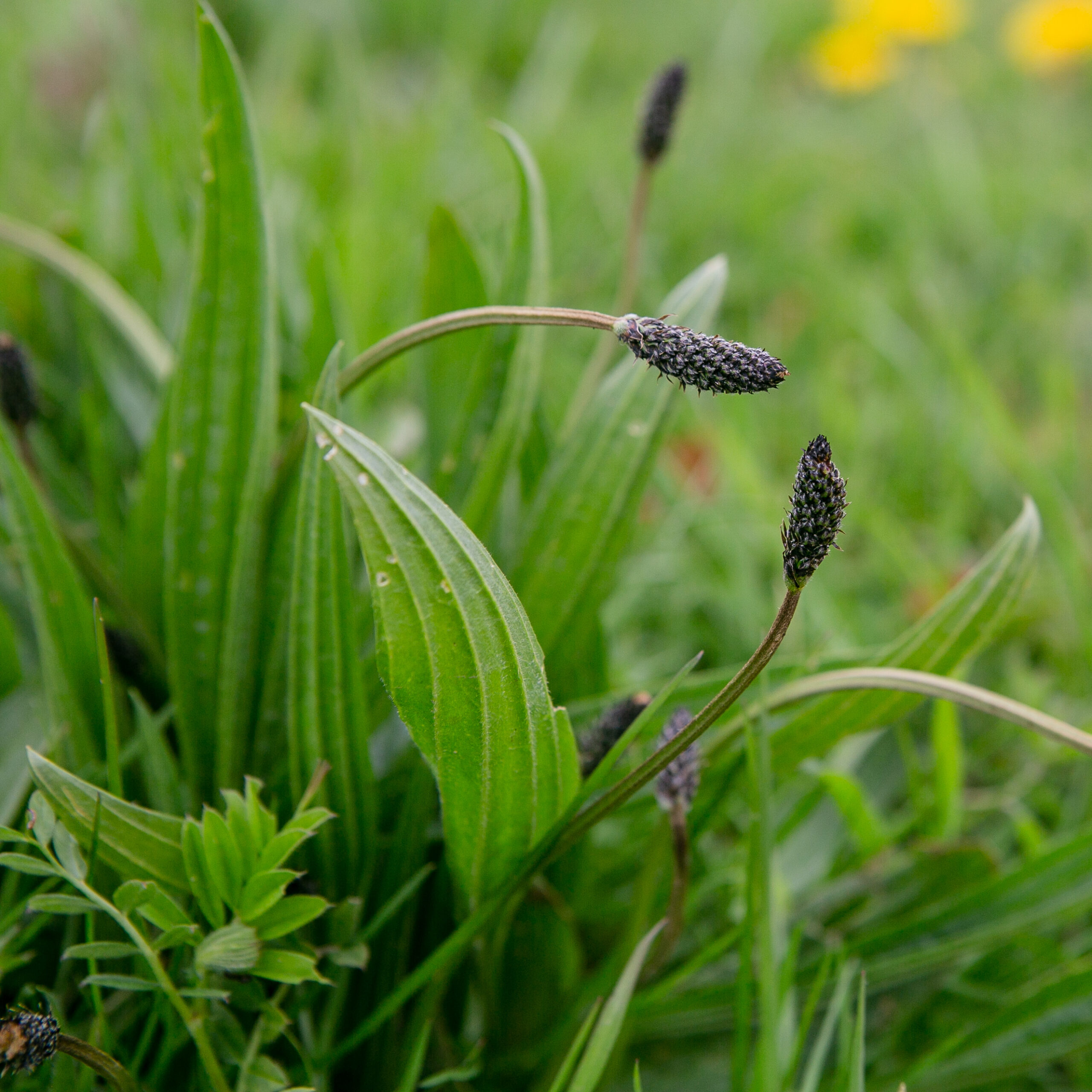

”This wild edible is nutritious (vitamins A, B, C and K, calcium, fibre, and many more). This perennial is well known for its anti-histamine content that it calm cuts, sores, stings and assists in kidney disease, lung conditions and bowel disorders. Many cultures revere this herb as it’s found across Europe, parts of Asia but is also naturalised all around the world.
GeorgeFlavour Fred
Fungi is in everything (including us) and studies are showing many the current food systems have removed these relationships (as it starts in the soil). This means we are not consuming the compounds within that we had evolved having and are losing much from our diets (wild grains vs commercially grown grains for example). Ergothioneine (ERG) is one in particular in this plant and other fungi that helps with cell protection (link in comments).

The relationship of ribwort plantain is a good example as this internal partnership with fungi brings the benefits of helping with a sting amongst many other things. Here is how is works: When Fungi live within the plant and its structure that known endophytic fungus. Wax caps (Hygrocybe species) has an endophytic relationship with Ribwort Plantain. Where the fungi attracts and digests insects for their nitrates. Whilst this Funghi breaks down the insects it is working with Ribwort Plantain, a partnership and mutual exchange of sugars and nutrients is occurring. By using this plant on a sting you are applying the compounds from the fungi used to break down the insect and these enzymes therefore are able to remove the “sting”. Let’s not forget the deep mushroom hit you can get in spring when the real mushroom addiction is taunting you and now we know why.
https://www.ncbi.nlm.nih.gov/pmc/articles/PMC7653990/