
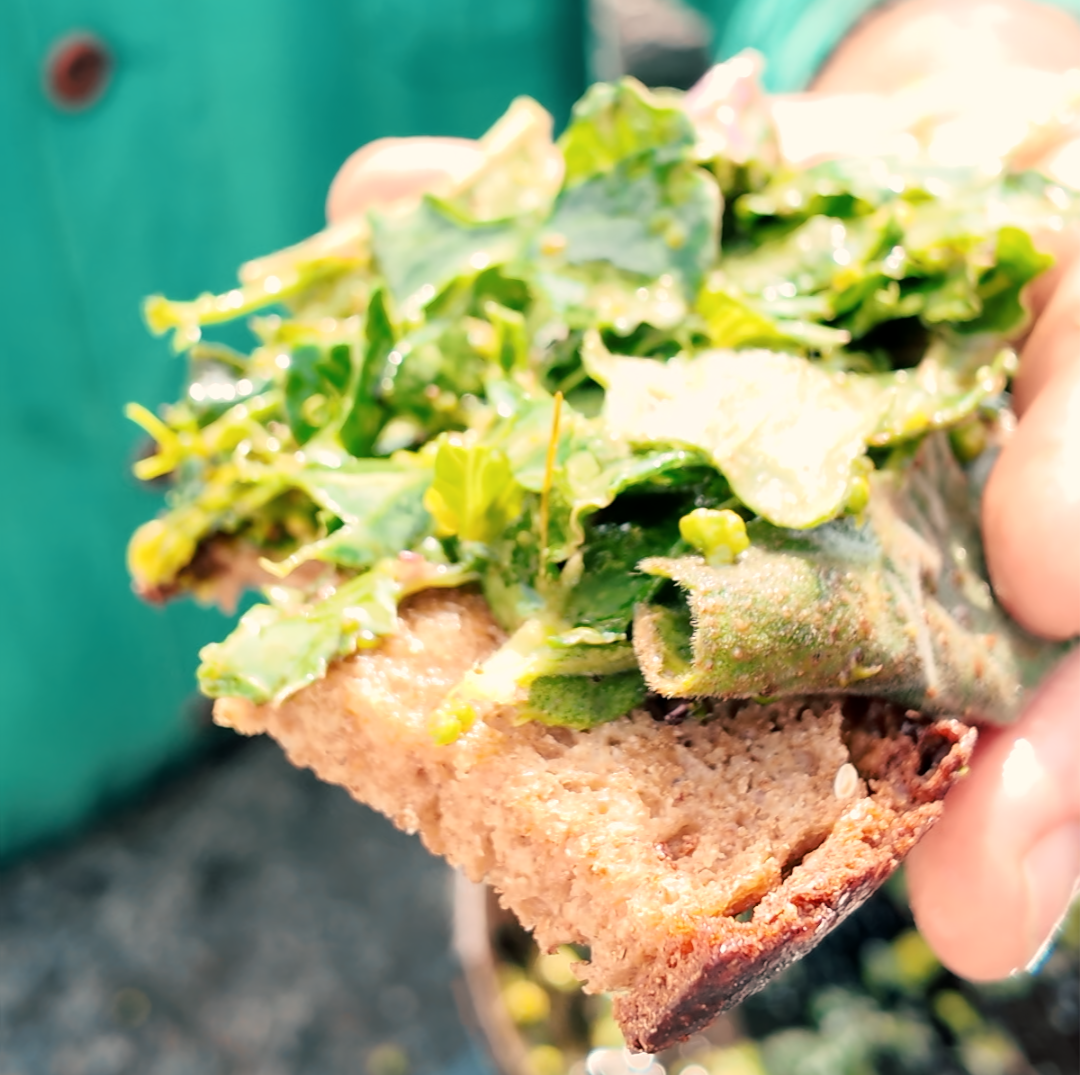

”I foraged along the coast for some of the most abundant plants, including sea kale, sea beet, herb alexander and tree mallow. I’ll make a video on each later, but here’s a tasty treat I made last week.
GeorgeFlavour Fred
Sea Kale (Crambe Maritima): This coastal plant is very tasty with crunchy leaves. In early spring, it has beautiful purple shoots and a short window of “sea kale broccoli” before the seed pods pop like peas or grapes, tasting like pea and cabbage. - Please note that this plant is protected in many places. Check bylaws and ensure you’re foraging in large colonies where it’s allowed. I practice and teach ethical foraging. Need for gravel, urbanisation and other issues have been the main reasons for its protection.
Sea Beet (Beta vulgaris subsp. maritima):
This wild ancestor of cultivated beetroot, chard and spinach grows on coastlines where its edible, succulent leaves can be used as a spinach substitute. Herb Alexander (also known as Alexanders, Horse Parsley or Black Lovage, Smyrnium olusatrum) This plant is a bit of a crowd pleaser due to its strong aroma. I like to use it all, and I’ve used the seeds infused in oil to toast my breast.
Tree Mallow (Lavatera maritima)
This abundant plant grows closer to the coast. If you’ve been following along, you’ll know I’ve made many dishes using a type of mallow called Jute Mallow (Molokhia), such as hubeza (green leaf patties), molokhia soup and green shakshuka. I used common mallow in its place. This mallow family (Malva sp.) includes well-known ingredients like okra and cacao, and all have a muscilaginous texture, which holds many uses. Many people know the soothing properties of mallow for throats, dry coughs and bronchitis. I love the texture this plant adds, and it also gets a good crunch when fried hard.