
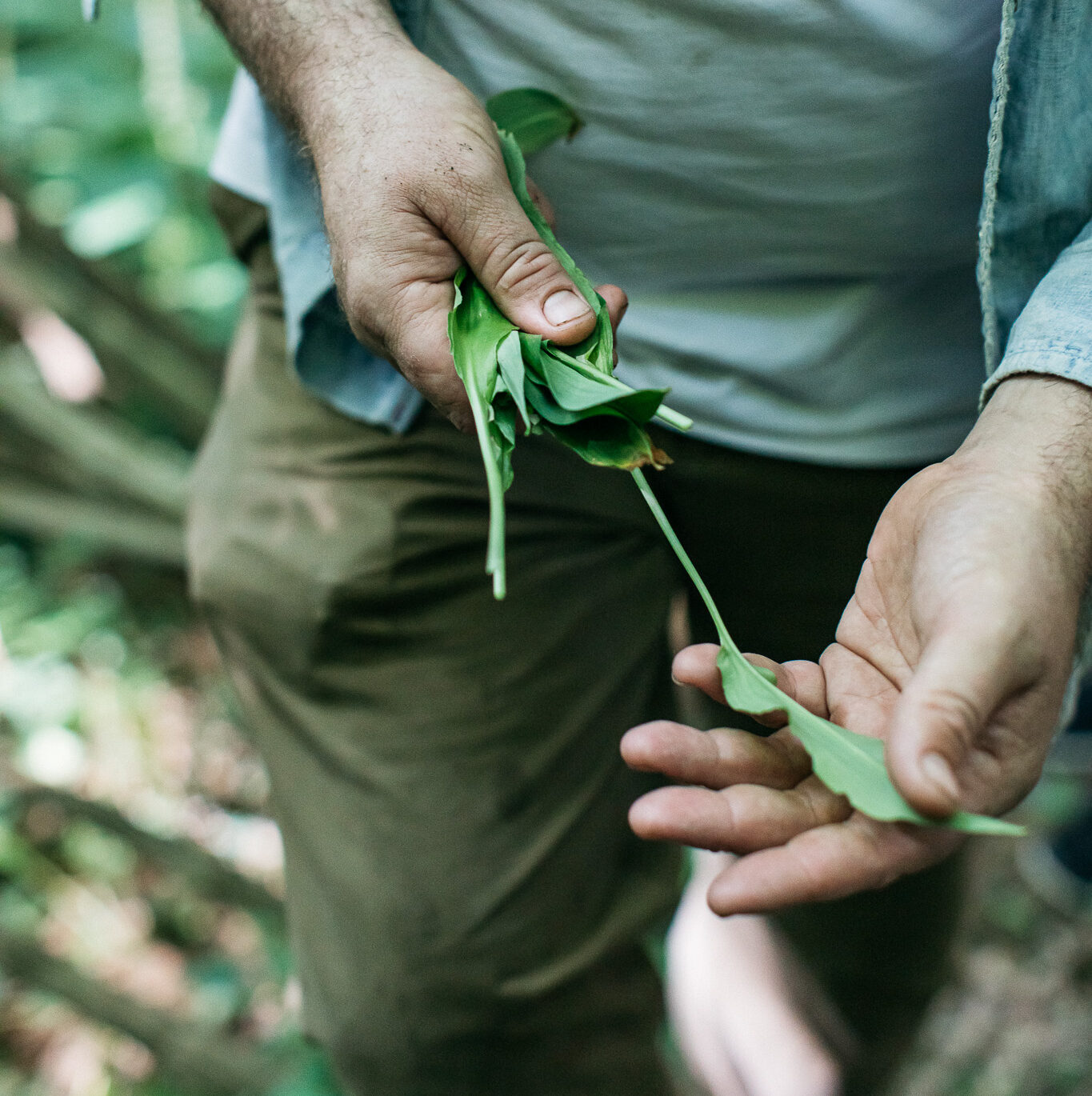

”Wild garlic (Allium ursinum) is also known as ramson, buckram, broad-leaved garlic, wood garlic, bear leek, bear’s garlic and is a common edible spring green. It can be used in many ways. Its leaves can be eaten raw in salads, blanched and used as a spinach substitute or made into a soup. It can also be used in pesto, compound butter, salt or lacto-ferment. Wild garlic has a garlic and spring onion flavour and is best when the leaves are young before the flowers appear. The flowers are also edible and can be added raw to salads. The bulbils (the round green balls left after the flowers fade) can be pickled for a garlicky caper.
GeorgeFlavour Fred
When looking for these bunny-shaped ears waving in the wind, we are looking to see a straight spine and similar vertical lines down the lance tip shaped leaf. A scape will form with the flower which is on a juicy three sided stem and as that opens up white flowers with six petals. The flower cluster are an “umbel” with multiple flower stalks (pedicles) spread out from a single point, similar to the ribs of an umbrella.
Obviously, they smell of wild garlic, which is helpful until you’ve handled enough that everything smells of it. One leaf growing from a single stem from the ground is important, as lily of the valley will have a straight robust stem and usually two leaves coming from the top with one layered over the other facing opposite ways. It’s a risk of writing and I did a reel about it earlier. Wild garlic has endless uses, but some of my favourites are chermoula, sauerkraut, kimchi, pesto, green oil, mayonnaise, powdered and mixed into salt, fermented powdered and mixed into salt, in green pea panelle, finishing dishes, stir-fries and wrapping like dolma. It’s an ingredient that can be substituted for anything in a recipe that contains garlic or spring onion. The only problem is that it doesn’t like high temperatures, so I tend to use it at the end of cooking or fermenting.