
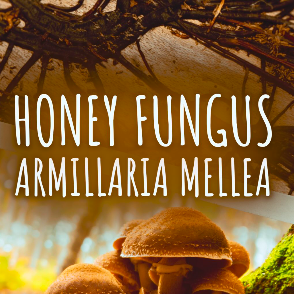

”This fungus gets a bad rep as its known as a parasitic fungus to trees and growing up if the neighbour had this in their garden it would be a reason to kick off. It’s the most common misconception when I speak about it. There are 5 species in the UK of Amillaria but with DNA sequencing the species has been found to haver over 30 varieties in the genus.
GeorgeFlavour Fred
With its honey coloured finely scaled cap which starts of rounded when you and flattens out with age looking darker in the middle. The stem is pale yellow when you but browns with age and there is a skirt (I said veil in the video - I meant skirt was tired) that is pale yellow and clearly visible as it ages. They grow in massive clusters and love fruiting all at once so just a few weeks ago people were seeing them everywhere. As you look closer under the bark from the trees you’ll see its bootlaces. These are rhizomorphs are melanin encasing the hyphae which is the building blocks of the mycelium. On this species they are flat and also are the reason why they are hated so much.
The ability of the bootlaces means that the fungus doesn’t need to fruit from a substrate to allow the spores into the air that then meet in the right environment forming that hyphae. The bootlaces can move through the soil and this means that can be quite aggressive and persistent in their ability to kill trees. If it was such a killer then there wouldn’t be any trees surviving this and where many come to the conclusion that this fungus is looking to take down trees in trouble or deal with certain areas in woodland like the apex predator. And for those with gardens/orchards the soil probably knew a diverse environment and the fungus is just trying to claim it back (GO FUNGI).
* can cause gastric upset for some (always a risk with all fungi do your research
** this is an overview of Armillia mellea not a full ID video