

”* please note this plant is protected in many places. Please check bye laws and ensure areas are large colonies where it’s allowed. Ethical foraging is what I practice and teach. As mentioned the need for gravel, urbanisation and other issues have been the main impact where this plant is protected
GeorgeFlavour Fred
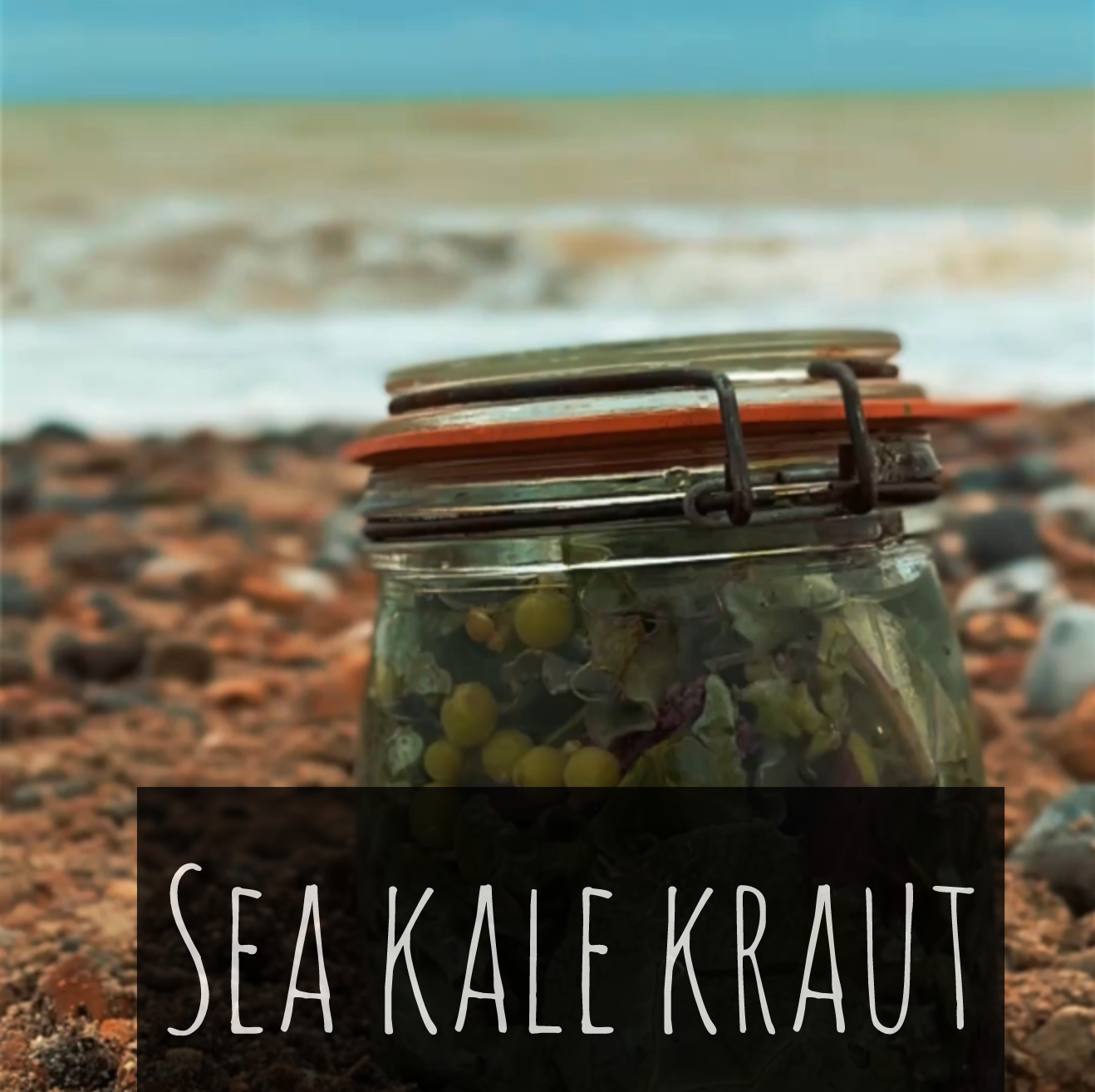
A very tasty special coastal plant with tasty crunchy leaves, very beautiful purple shoots in early spring and for a very short window tasty seed pods that pop like a pea/grape when eaten (tasting like pea x cabbage). Which made it perfect for a Sea Kale Kraut with those glorious peal-like seeds that I washed and submerged in a 2.5% sea salt brine (25g per 1000ml). Ready in a week.
Thought it’s not listed as a rare plant it certainly seems to have taken a hit in a number of areas where the decline of the colonies is down to fluctuating environments (serious winter storms by the coast) and also demands for building and gravel extraction as well as deferences, etc
Found growing on shorelines means it’s a hardy enough to deal with weather and salinity where the roots are gnarly tough (obviously not to be dug up). Getting its nutrition from the decomposition of seaweed at high drift lines amongst other things. These need to be stable for a long period of time (5-20 years, 5 years to settle in and flower stated). Very rarely spreading inland although some have trained to grow in gardens. I love this perennial brassica that grows wild around the coasts of Europe, stretching from the Atlantic Ocean to the Black Sea (again in decline in a number of areas but also significant rises in populations). Used by many including the Greek and cultivated since the 16th Century. Boasting many health benefits as well as being eaten to prevent scurvy, boost the immune system and improve metabolism.