
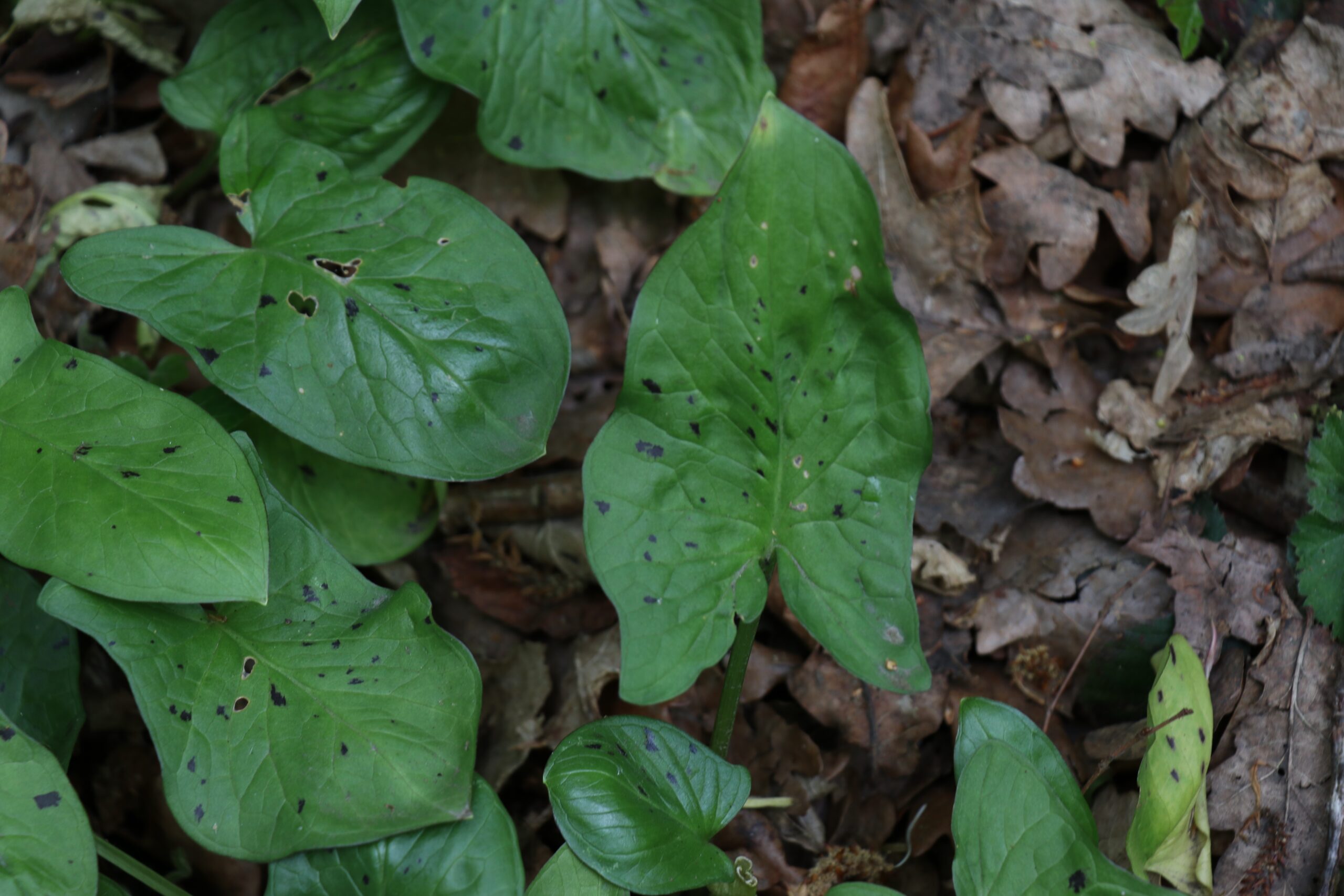

”- Disclaimer: Do not attempt this at home unless you’re fully informed and have researched thoroughly.
I consume this toxic plant by detoxifying it using a traditional method taught by @thewildfood Lukas Luczaj, also available on YouTube. While Arum species are toxic raw, many countries process them to make them edible.
GeorgeFlavour Fred
I frequently discuss this toxic plant, especially during wild garlic season. I recently posted about it, so check it out.
The presence of oxalates, a common obstacle to using some plants as food and a potential risk factor for kidney stones (bonds with calcium in the stomach) poses a significant challenge with many plants. Here oxalates are pre-formed into large crystals that can irritate or even damage our digestive tract. The shape and size of these crystals vary between Arum species. Despite its toxicity raw it is seen as inedible in most countries. However this plant is consumed, quite regularly regularly for some, in others (Turkey – tirşik; Northern Iraqi Kurdistan – Kardi or Kardu; Palestine/Lebanon – Luf or Louf; Iran – Kardu or Kardim, Georgia – Used to make phkhali (vegetable balls)). The edibility of Arum was first documented by Theophrastus in his “Enquiry into Plants” in the 2nd century BC. He noted that the root of cuckoo-pint (Arum maculatum) and its leaves are edible if boiled in vinegar. For more historical information on its debility, refer to this article: https://pmc.ncbi.nlm.nih.gov/articles/PMC11859539/ (also available in the comments). I processed it by cooking it for several hours and changing the water with lemon juice and sumac. It seems the practice of using acidity to break down the calcium oxalate crystals has been used for thousands of years. The result was quite pleasant, not exceptional, but I suppose in abundance, there’s always a way to make it palatable. I’ll keep experimenting to find something truly interesting. I enjoyed it with some yoghurt, sumac, and fermented wild garlic powder.