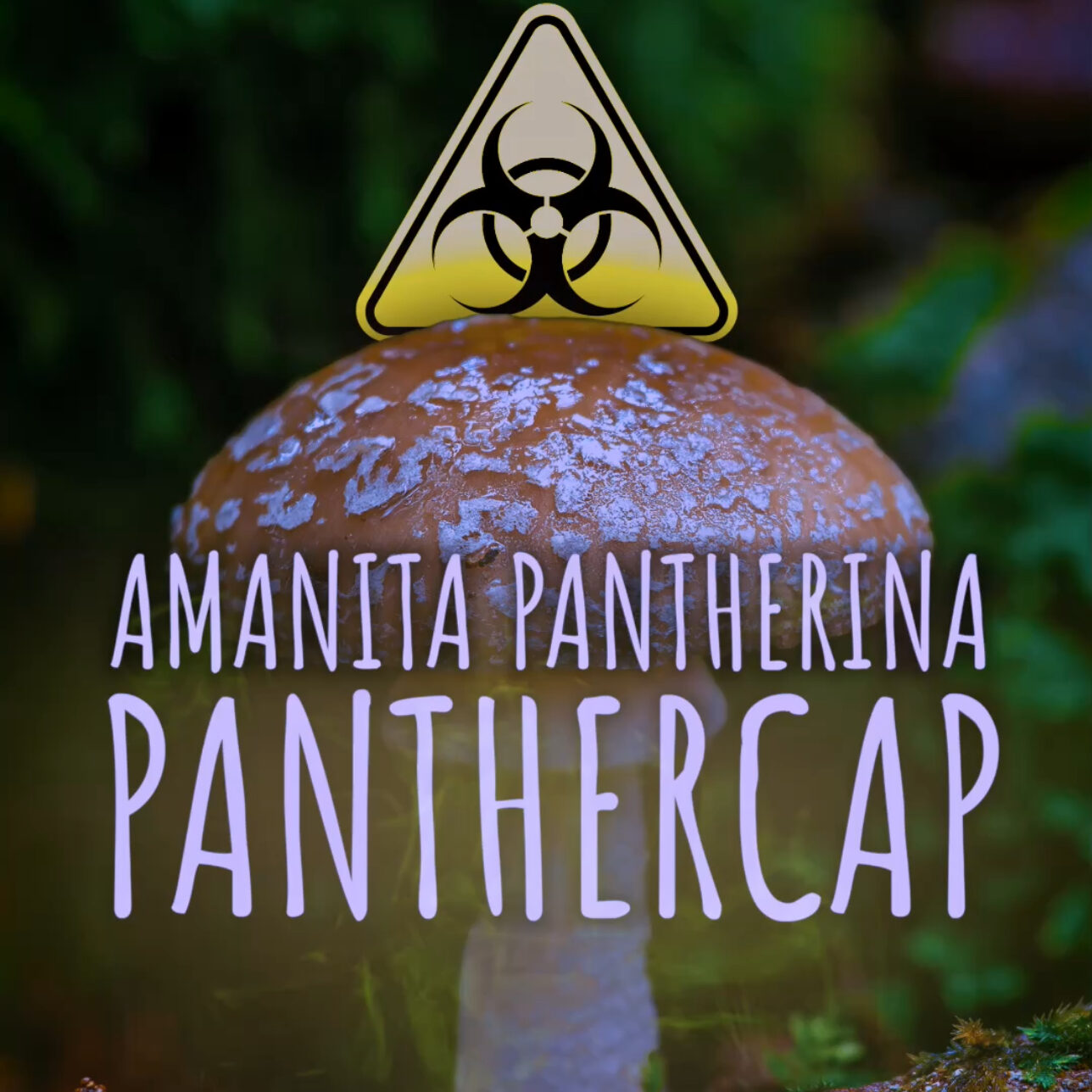

”The panther cap has a brown cap, white veil fragments, does not have a grooved ring (no striations) but a smooth skirt, and does not blush when damaged like The Blusher (Amanita rubescens). The bulbous base has a gutter and clear margin/border. This mushroom has the same compounds as the Fly Agaric (Amanita muscaria - specifically the ibotenic acid & muscimol but not so much muscarine) but in much larger quantities many say 5-10x more. A fairly uncommon mushroom where some field guides list as deadly. I find mainly in deciduous woodlands with lots of beech and it still scares me everytime.
GeorgeFlavour Fred
WARNING Toxicity and effects The panther cap is highly toxic and can cause severe illness. It contains psychoactive compounds that can lead to hallucinations, delirium, time slowing and altered perception and reactions. Ingestion can cause nausea, vomiting, dizziness, confusion, and in severe cases, seizures. There are people that have documented this experience and it does not sound good. Here’s a link to Paul Stamets Describing A Bad Panther Cap Trip Experience https://youtu.be/kxBSuwRXynE?si=hmuQX_gMVeQOV8n2 I imagine this could lead to death from exposure as was a risk for Paul in his story.
I imagine this could lead to death from exposure as was a risk for Paul in his story.
Important note
* Do not consume: Due to its toxicity, the panther cap should never be eaten.
* Confusion with other species: It can be confused with other mushrooms, such as the blusher (Amanita rubescens) and the Grey Spotted Amanita (Amanita excelsa) these lack the guttering at then base (volva) and they also have stripes (striations) on the skirt
* I don’t advise messing about with this family unless you are experienced