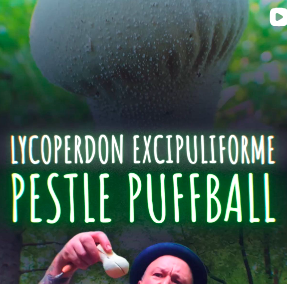

”Puffballs create a puff of spores as they age. The name “Lycoperdon,” meaning “wolf’s fart,” suggests that the fungus spreads its seeds by letting out a plume of spores and waiting for a passing animal to stand on it.
GeorgeFlavour Fred
Unsurprisingly, the fungus is pestle-shaped with an outer layer of spiny, crumbly skin (ectoperidium). When young, it’s a creamy grey colour that browns with age. The inner layer, or endoperidium, is ochraceous, papery, and thin. The inside is like a white marshmallow, all spongey with a strong mushroom aroma.
Once the fungus starts developing its spores, the inside turns brown and powdery. The top of the pestle shape, the endoperidium, opens up right on the tip and starts releasing its spores. It really wants to be stood on to eject a large amount, looking like a fart.
I often see puffballs along the edges of paths as I walk in groups. They’re found on soil and prefer woodlands. When pure white inside, all puffballs are edible, and I love eating them. However, given their spongey nature, cooking them in a pan with oil or butter often results in them soaking up so much oil that they’re almost inedible. It depends on how much oil and butter you like, I suppose.