
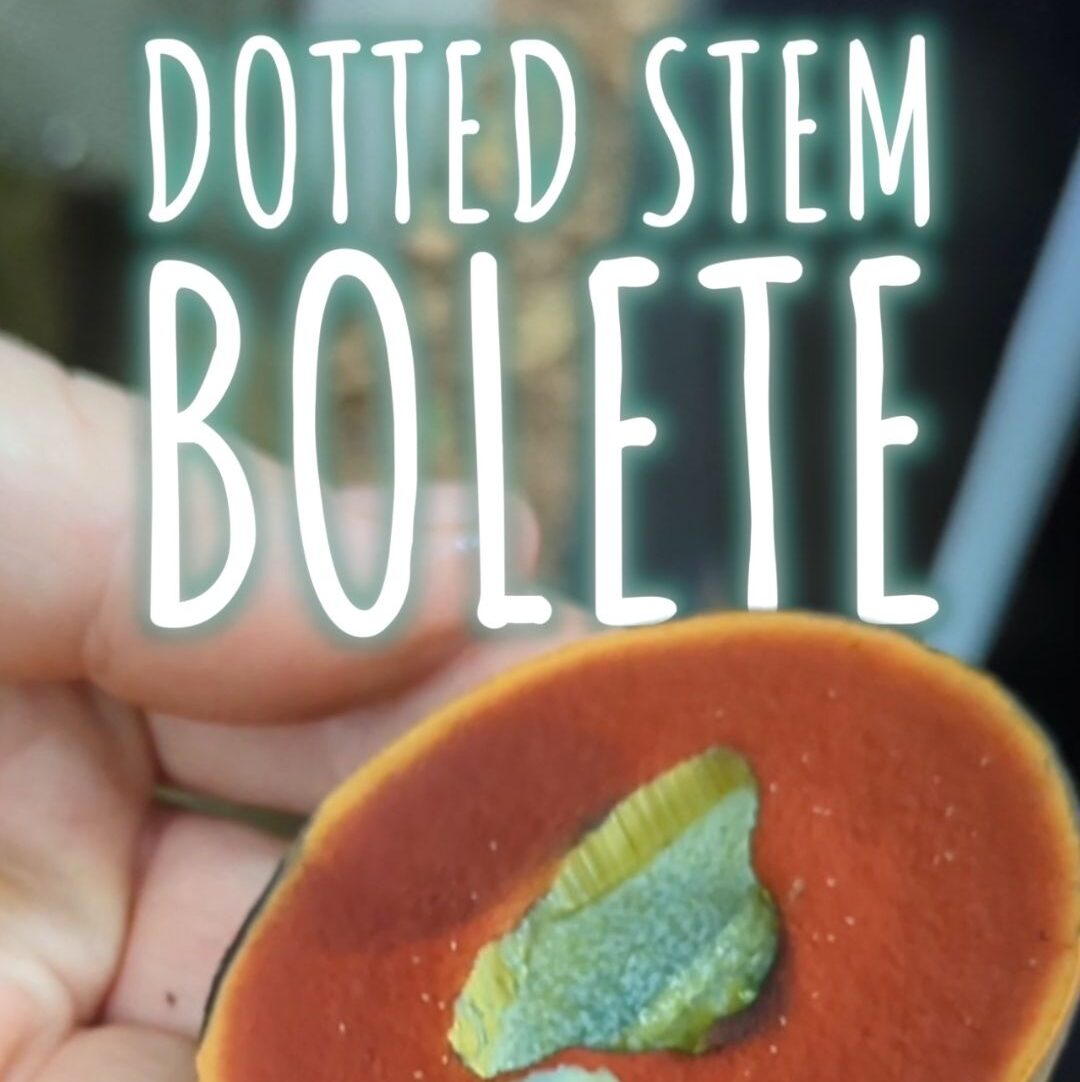

”With its brown shade to the cap, yellow/red tubes, yellow/red dotted stem, and the characteristic colour change you’ll find in the Neoboletus category. There are plenty of colour-changing boletes, many of which are poisonous/toxic. The colour change is from oxidation, bringing on the colour change from egg yolk yellow to a wonderful blue that fades over time (and matches my coat).
GeorgeFlavour Fred
The dotting on the stem helps me identify it versus many of the poisonous colour-changing boletes, so I’m always happy to spot that straight away. If it’s a colour-changing Bolete that has red on it (like this one) AND has reticulation (webbing) on the stipe (stem), we want to be cautious because there are a number of poisonous ones to be aware of, including the Devil’s bolete and Oldrose bolete, both very rare to me but keen to see. Most will always advise to be understandably careful in this group, but there’s a common risky edible Neoboletus with webbing on the top half of the stipe called the Lurid bolete (Suillellus luridus) which I also enjoy eating but it needs some serious cooking before it wont make you sick. It’s also been listed as inedible and then edible a few times I can remember. Keep on top of your research and to be safe perhaps as a novice consider learning these colour changing boletes very well before considering consumption.
Anyway, this must be cooked well, and I had it on toast. My go-to classic is good bread, caramelised onions, garlic, and cooked over fire, finished with olive oil.