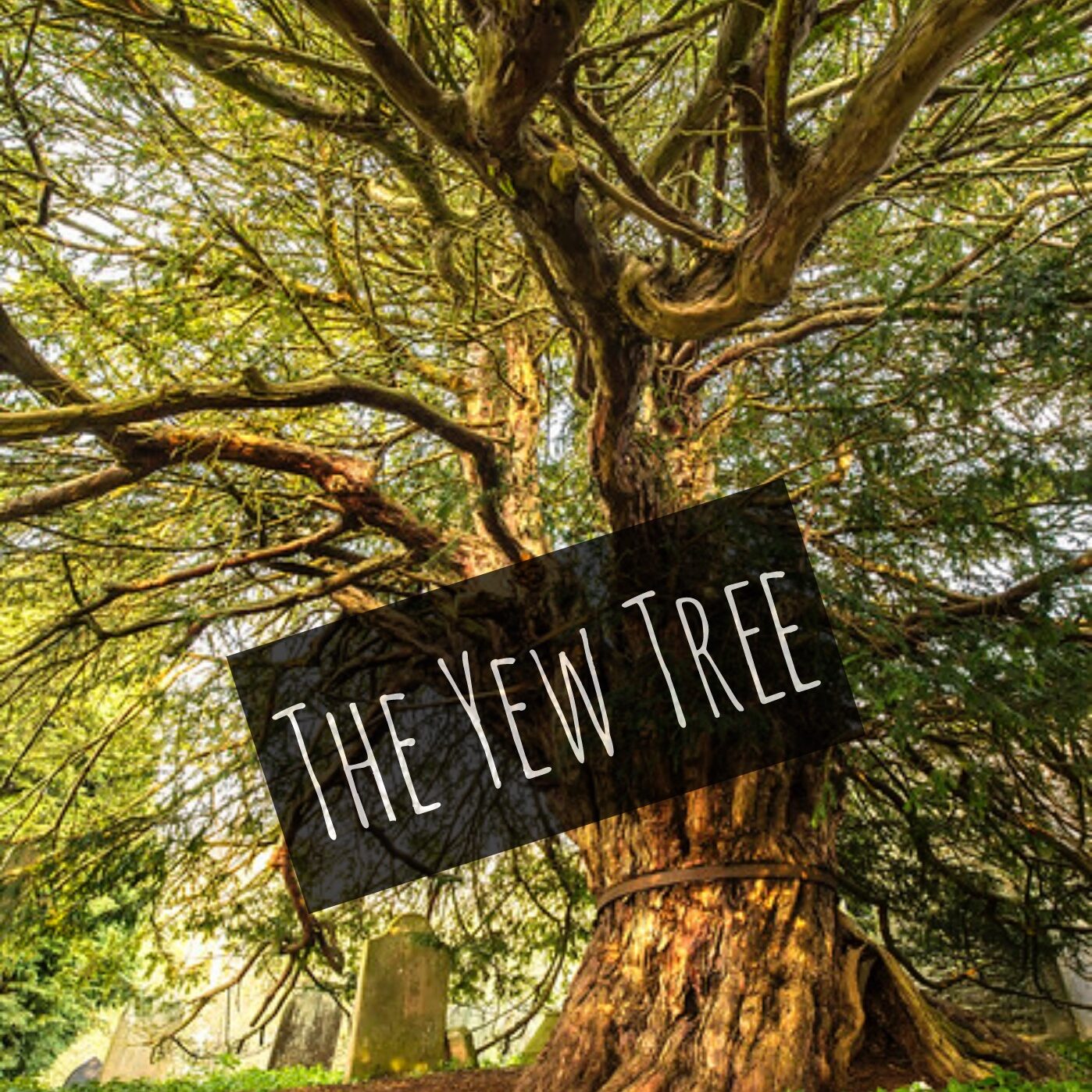

”Here we have a glorious very old yew tree. I haven’t been able to exactly date this one but we know it’s over 500 years old. These trees contain a poisonous alkaloid called Taxine which is a cardiotoxin.
GeorgeFlavour Fred
The yew tree has a long-standing association with death and burial, particularly in and around churchyards. It’s believed that burying the dead near yew trees was a way to protect them, possibly to prevent them from rising again.
Held sacred by the Druids in pre-Christian times, was likely observed for its longevity and regenerative qualities. Drooping branches of old yew trees could root and form new trunks upon touching the ground, symbolising death and resurrection in Celtic culture.
The Celts were also aware of the toxicity of the tree’s needles, which may have further contributed to its association with death. Shakespeare was familiar with these qualities when he had Macbeth concoct a poisonous brew, including “slips of yew, silvered in the moon’s eclipse”.
These themes of death and resurrection persisted into the Christian era. People buried yew shoots with the deceased, and used boughs of yew as ‘Palms’ during Easter church services. Today, yew trees have become a popular association with old churches in Britain.
As mentioned Hel, in Norse mythology, originally the name of the world of the dead had a strong relationship with the yew tree.
TAXOL
As with many medicines a fungus breaking down the compound Taxine from the Taxus spp. resulted in a number of compounds and research taking place. Taxol (paclitaxel) was found from the Pacific Yew and is one of the most commonly used anti-cancer treatments. Which is currently synthesised in labs and is a 65 step process (I thank the attendee to my walk who talked me through this last year).