
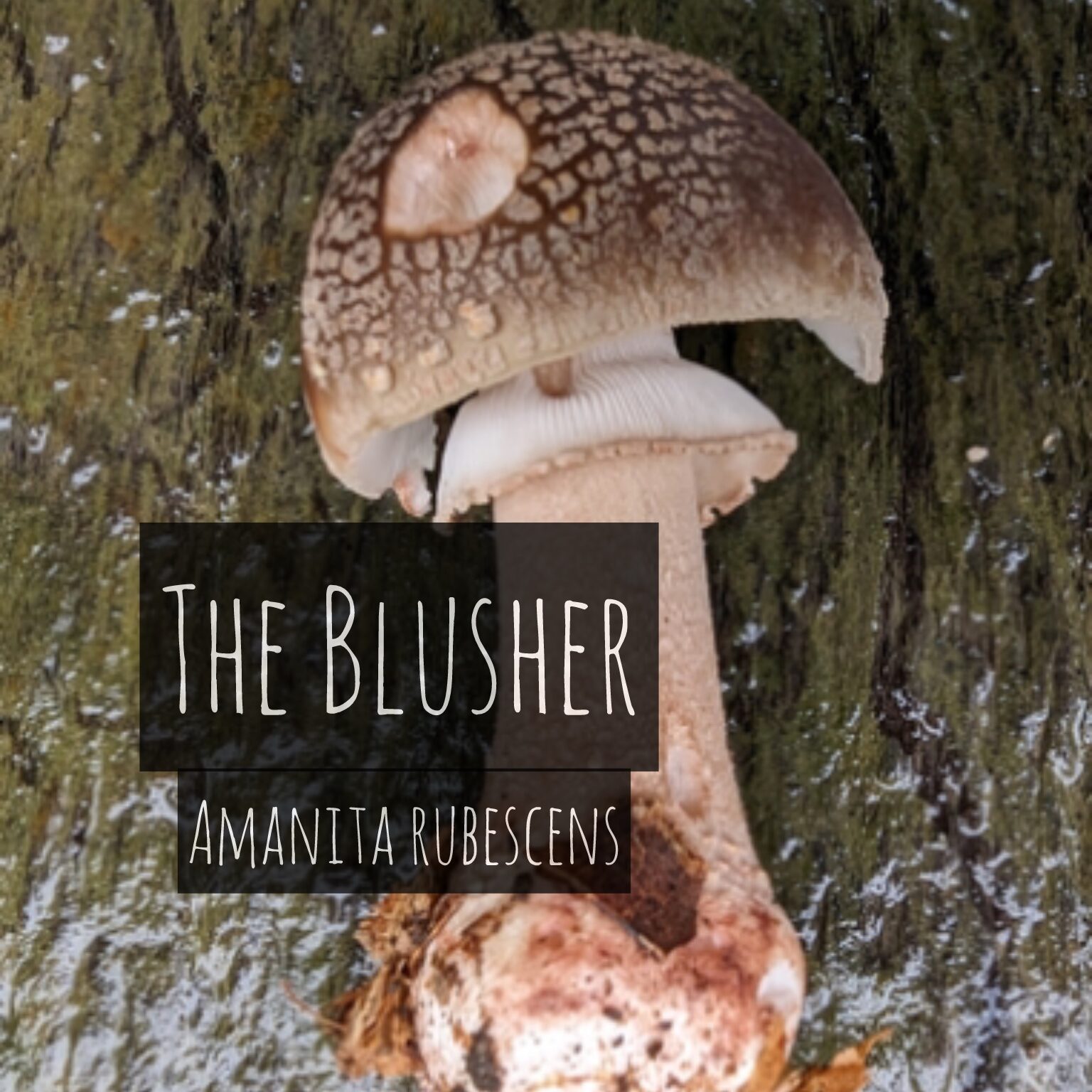

”Known because it changes from white to pinkish red when cut or damaged and exposed to the air. Other features include a bulbous base, cap edge (margin) finely grooved, striations (vertical grooves) on the skirt, white gills.
GeorgeFlavour Fred
Like many wild mushrooms this one in particular must be thoroughly cooked to remove the hemolytic toxin which causes anaemia if eaten raw. Because the amanita family has a many poisonous and deadly mushrooms it’s good practice to take caution and just get comfortable identifying first rather than thinking about edibility at all. Going out with an expert when foraging is an absolute must please see the captions for a breakdown of Amanita Identification.
The main concern when looking at the blusher is the panther cap which has a brown cap, white veil fragments, does not have a grooved ring (no striations) is smoother for that reason as it is above the skirt, and does not blush when damaged. The bulbous base has a gutter and clear margin/border. This mushroom has the same compounds as the Fly Agaric – Amanita muscaria (ibotenic acid, muscimol, muscazone and muscarine) but in much larger quantities. Some field guides list as deadly
There are several other identifying features to consider, hence the cautionary statement earlier. Colour varies considerably too in this family at different ages and weather conditions.
AMANITA IDENTIFICATION
To recognise the Amanita you are looking for mycorrhizal Funghi. There will be relationship with trees/woods so expect there to be a tree nearby even alone in a field/hedgerows. The mushroom (fruiting body) starts its growth cycle with a universal veil – like an egg in the ground where within the membrane the fruiting body is soon to erupt. This means most have a visible remains of the universal veil at the base with a sack-like structure and many bulbous looking like a cracked egg (to me).