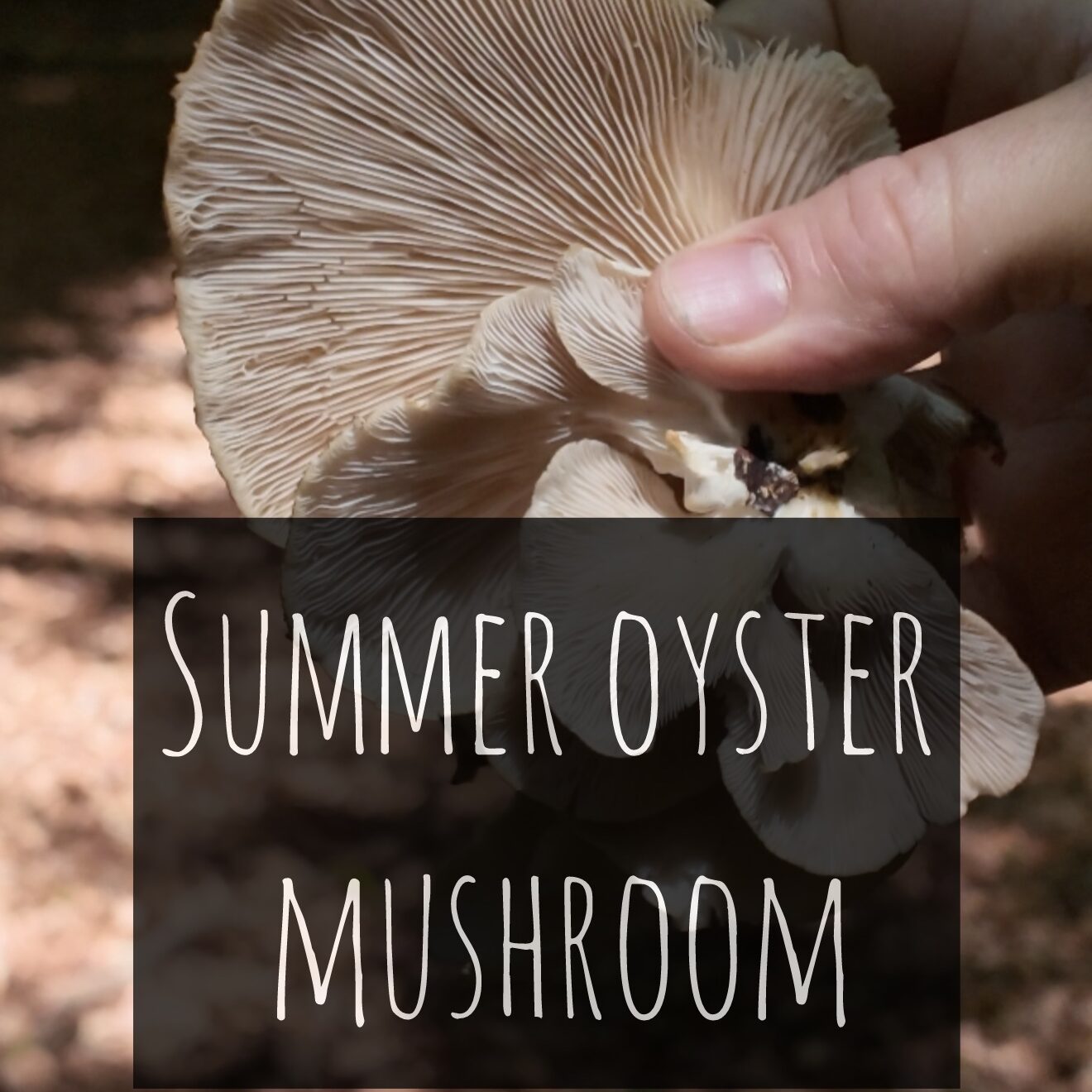

”Known for preferring the warmer months of the year and a shell shaped paler cap this oyster mushroom is a choice edible. Growing out of various trees but prefers beech so keep an eye out in beech woodlands on the fallen/dead trees. The gills are tightly packed running almost all the way down the underside.
GeorgeFlavour Fred
It’s a meaty one that works well as a shred by tearing the edge of the cap and I often cook down for a pulled option for burgers, on top of hummus and more.
This fungi is an omnivores as they get vital nitrates from passing by nematodes (microscopic worms) and “lasso” them pull them in and get their valuable nitrates.
What’s not to like – as always we need to identify properly. We could be looking at the grey oyster that prefers the colder months which is similar and edible. Also is the Olive Oysterling (Sarcomyxa serotina) has darker gills and is more olive coloured, even when young. Although in places it is reported as edible there are reports of it being carcinogenic – best to avoid in my opinion and many state it doesn’t taste that good so why even bother. The main concern is with the oyster mushroom-like looking mushroom known as Angel Wings (Pleurocybella porrigens) which has been proven to have compounds that link to catastrophic brain damage. They are much more slight, paler and found on stumps/fallen trees in coniferous woodlands. The woodland is the key here. The compound with all the risk is Pleurocybellaziridine which is an unstable amino acid that has the link to brain damage and there is plenty of research information if you want to go have a look.