
”This is a rare fungus in the UK and despite being listed as edible on some sources it should be left alone. A few sources as with any fungi say there is a risk to a few coupled with reports that it doesn’t taste that good means lets just leave it be. The family has some very dangerous ones (deadly webcap & fools webcap being the most dangerous/deadly) in it too so it’s a risk I don’t take or need to really.
GeorgeFlavour Fred
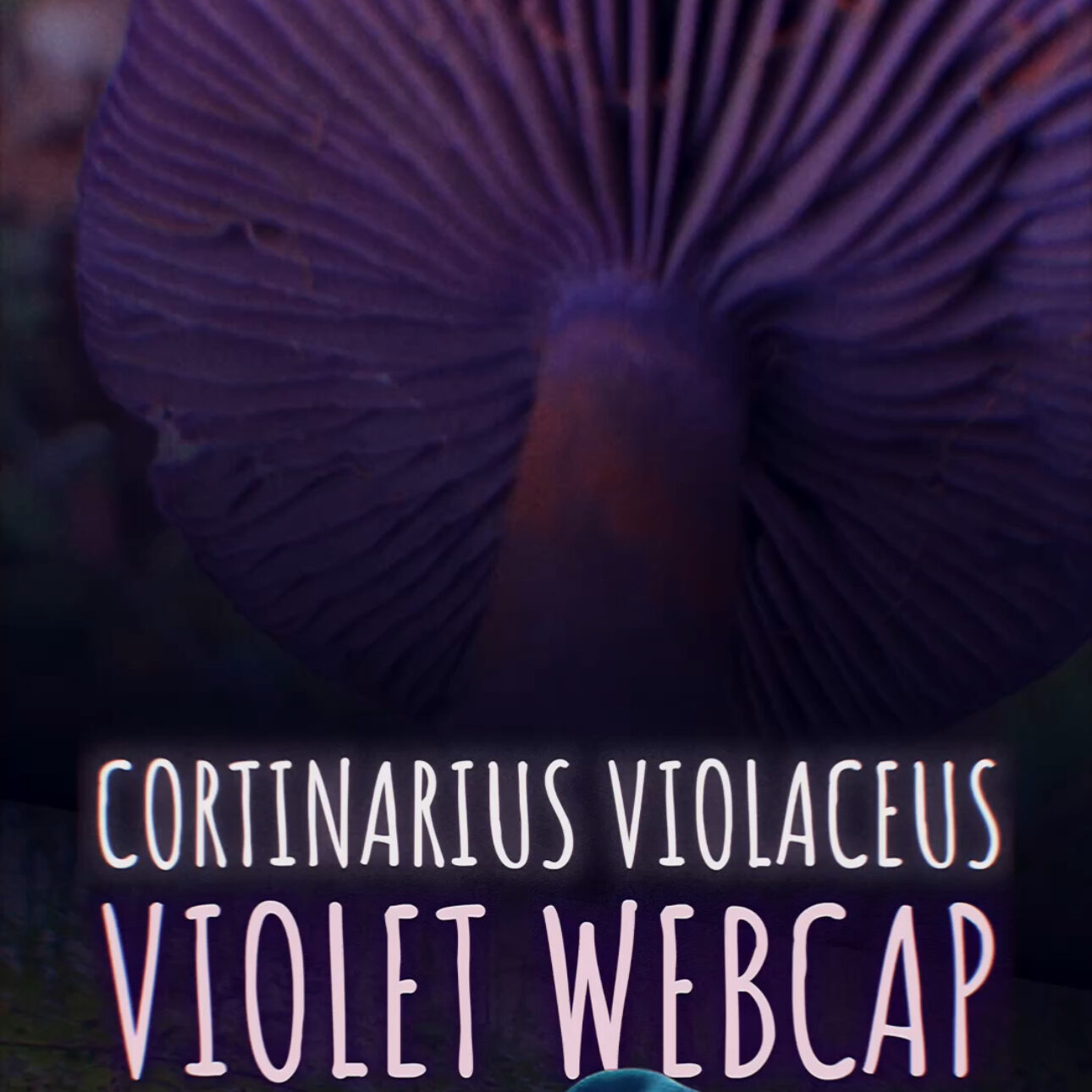
It’s a beautiful fungi and loves an alkaline (chalk & limestone) environment which explains why I have been finding so much of it lately. This mushroom is always a delight to see with its striking violet/purple throughout and clear rust debris from its rusty spores under the gills. They get pretty big up to 12cm most say they are mycorrhizal with decidous but I often find them in mixed environments with confiers. Some say there are two varieties one that preferes deciduous and another that for confiers with different spores (Cortinarius violaceus var. violaceus, which is mycorrhizal with broadleaf trees, and Cortinarius violaceus var. hercynicus, which forms mycorrhizae with conifers. The former has almond-shaped spores while the latter is distinguished by its ellipsoidal spores - I need a microscope)
The name webcap comes from its web-like partial veil or curtain (cōrtīna). The colour is striking and the dome shaped cap is also textured/downy. Adnate gills that are moderately spaced with rusty looks from the spores (that are rusty). The stem is often clavate (club shaped), also purple & fiberous and when large can be an inch across. The stipe often looks stripy as it grows.
Listed as rare in Britain but finds this year is significant.